Ottawa · Vietnamese food guide · pho toppings
Pho toppings: build a bowl around texture
Pho toppings are more than a list of meats: each cut brings its own texture, while herbs and sauces let you adjust the bowl at the table. If you are choosing between a focused beef pho and a combination bowl, start by deciding what you want to feel in each bite—tender, rich, chewy, or springy. This guide explains the menu words, shows how a combination can vary, and gives Ottawa diners a simple way to order.
By Best Vietnamese Restaurant editorial team · Published
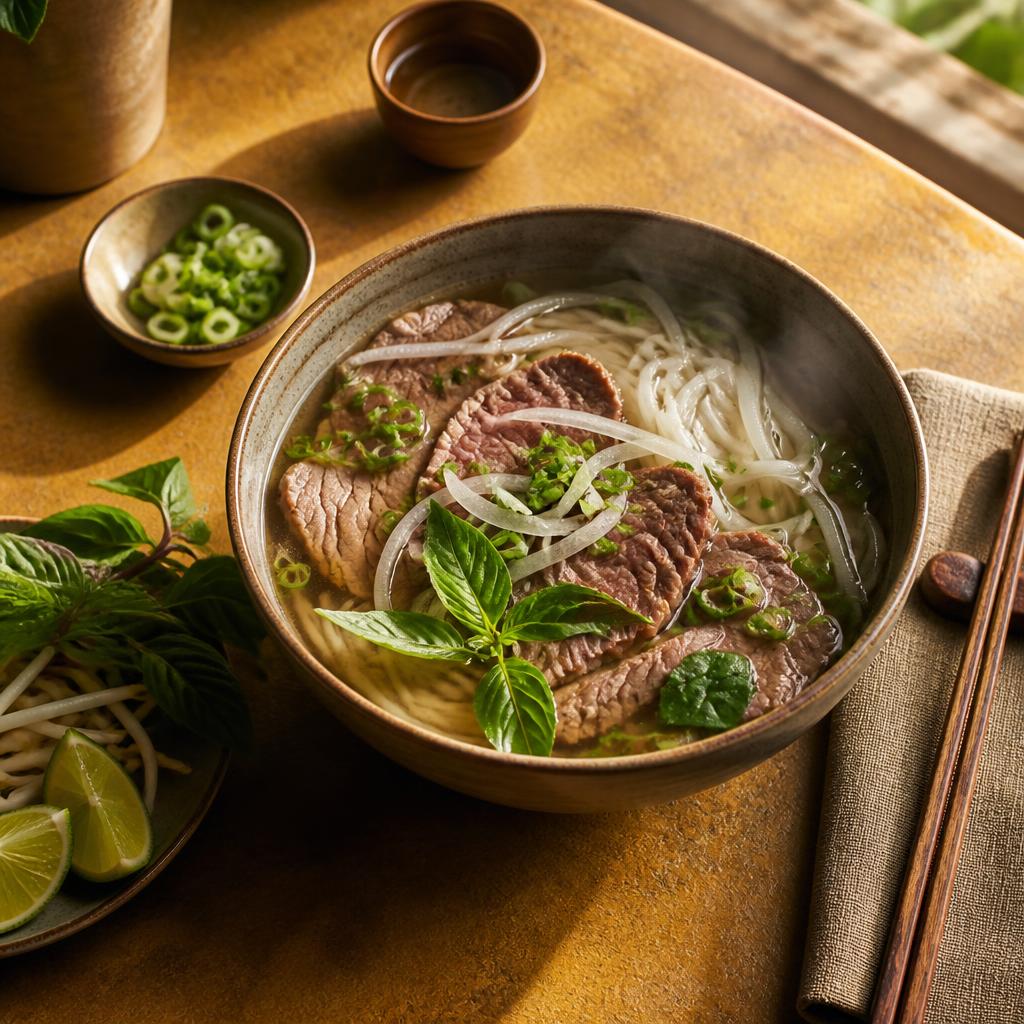
What counts as a pho topping?
In a pho order, “toppings” can mean two different things. The menu’s protein selection—beef, chicken, tofu, or a combination—usually arrives in the bowl. Herbs, bean sprouts, lime, chilli, and sauces are often served beside it so you can season the soup yourself. Some menus also use “topping” for the noodles or sliced onions, so the restaurant’s wording may not match another shop’s exactly.
For beef pho, the most useful distinction is the cut and how it feels to eat. A thin slice of rare beef is soft and tender; a slow-cooked cut may be more substantial; tendon is gelatinous and pleasantly chewy; tripe is springy; and a Vietnamese beef ball is dense and bouncy. A bowl can stay simple with one option or combine several.
That texture-first view helps if a menu is unfamiliar. Instead of trying to memorise every Vietnamese term before ordering, decide whether you want a mild first step or a bowl with more contrast. The Ottawa pho guide explains how broth, noodles, herbs, and condiments fit together; this article focuses on choosing the toppings.
Beef toppings, explained by texture
Vietnamese menus often write these words without accent marks, and English descriptions can vary. Treat the Vietnamese term as a clue, not a promise that every restaurant uses the exact same cut or preparation. When the distinction matters to you, ask what that kitchen means by the label.
| Menu word | What to expect | A useful clue |
|---|---|---|
| Tái (rare beef) | Thin slices that are served rare and finish cooking in the hot broth. | Tender and delicate; a focused first choice. |
| Chín (cooked beef) | Beef that has been cooked through; the particular cut depends on the menu. | A more fully cooked option than tái. |
| Nạm (flank or brisket) | A cooked cut commonly described as flank or brisket in English. | Ask how the restaurant describes its version. |
| Gầu (fatty brisket) | A richer brisket-style cut with a more pronounced soft-fat texture. | Choose it if you enjoy a fuller, richer bite. |
| Gân (tendon) | Long-cooked tendon with a gelatinous, gently chewy feel. | A texture choice more than a strongly flavoured one. |
| Sách (tripe) | Cooked beef tripe with a distinctive springy chew. | A good option when you like firm, bouncy textures. |
| Bò viên (beef balls) | Seasoned Vietnamese beef balls, often cut into halves or slices. | Dense and springy; easy to pick up with chopsticks. |
Not every pho shop offers every cut, and some kitchens group several cuts under one English label. If you are avoiding a texture, say so plainly: “Could you tell me which cuts are in the combination?” is more useful than assuming “special” means the same recipe everywhere.
A quick note on tái
Tái generally means rare beef. It is commonly sliced thin and placed in the bowl so the hot broth cooks it as it is served. If you prefer beef that is fully cooked before it reaches the table, ask for a cooked-beef option and confirm what the menu offers. The Vietnamese menu decoder can help with other common menu terms, but a restaurant is the best source for its own preparations.
Single cut or combination bowl?
A single-cut bowl lets one topping stand out. Rare beef keeps the bite tender and straightforward; cooked beef offers a familiar, firmer texture; chicken makes a different kind of pho altogether. This is a useful way to notice the broth and noodles without several meat textures competing for attention.
A combination bowl is for variety. You might find two or more cuts together, with a mix of soft, rich, chewy, and springy bites. On Vietnamese menus, đặc biệt means “special”; in pho ordering it often signals a house-selected combination, but it is not a standard recipe with a fixed list of ingredients. Ask what is included if you want to avoid a particular cut or are ordering for someone who is new to tendon or tripe.
If you are trying combination pho for the first time, choose it because the mix sounds appealing—not because “special” automatically means larger, better, or more traditional. A single-cut bowl is not a lesser order. The right choice is the one whose texture and portion suit you.
Herbs, sprouts, and sauces: finish the bowl in stages
Fresh herbs and table condiments change the flavour more than the meat choice does. A typical pho service may include Thai basil, bean sprouts, lime, fresh chilli, or sliced green onion; the exact tray depends on the restaurant and the bowl. Herbs add aroma, sprouts bring crunch, lime adds brightness, and chilli raises the heat.
Try this order of operations:
- Taste a spoonful of broth before adding anything. That gives you a reference point.
- Add a small handful of herbs or sprouts, then take another sip. You can always add more.
- Squeeze in a little lime if you want a brighter, sharper finish.
- Add chilli gradually. Fresh chilli and chilli sauce can build heat at different speeds.
- Try hoisin or another sauce in a small amount—or on the side—so you can still taste the broth.
There is no required “correct” sequence. The practical point is to adjust in small steps: if you tip every sauce into the soup at once, it becomes difficult to tell which one changed the flavour. If a garnish or sauce contains an ingredient you need to avoid, check with the restaurant before adding it.
A simple way to choose your bowl
Use this short decision guide when you are choosing from a pho menu in Ottawa or anywhere else. It is not a ranking; it is a way to translate texture preferences into a useful question for the server.
- Want the simplest beef option? Look for tái (rare beef) or a cooked-beef option if you prefer no rare slices.
- Want a richer bite? Ask whether the menu has fatty brisket or another richer cut.
- Curious about chew? Try tendon, tripe, or both if they are listed and sound good to you.
- Like a springy, familiar bite? Beef balls may be a comfortable addition to a mixed bowl.
- Want to sample several textures? Ask what the combination includes before choosing it.
You do not need to order a full combination bowl to explore. If the restaurant offers substitutions or a choice of cuts, ask whether you can start with one familiar topping and add a new texture next time. Availability and portion options are restaurant-specific, so confirm before placing the order.
A current Ottawa menu example
For a local example of how a menu can group textures, the official listing for Pho By Night in Ottawa’s ByWard Market currently describes its “Supreme Soup Bowl” with rare sirloin, brisket, tendon, and house-made beef balls in bone broth. The restaurant’s current menu is the source for that description. It uses “Supreme Soup Bowl” as the dish name; the menu does not call it phở đặc biệt, so the example should not be treated as a standard definition of that phrase.
Pho By Night is a disclosed featured partner of this guide. This is a reference to its published menu, not a first-hand restaurant review or a claim that one bowl is objectively best. Restaurant menus can change, so check the official listing or ask the restaurant about the ingredients and preparation that matter to you.
If you are planning a food outing, the broader Ottawa Vietnamese food guide gives more local context. For a closer look at the soup itself, return to the pho encyclopedia and compare the role of broth, noodles, and toppings.
Frequently asked questions
What are common pho toppings?
Beef pho may include rare beef, cooked beef, brisket or flank, tendon, tripe, or beef balls. Herbs, bean sprouts, lime, chilli, and sauces are often served alongside the bowl. Exact options vary by restaurant.
What does tái mean on a pho menu?
Tái generally means rare beef. It is usually thinly sliced and served in hot broth, which cooks the slices. Ask for a cooked-beef option if you prefer the beef fully cooked before serving.
What comes in phở đặc biệt?
Phở đặc biệt usually means a special or combination pho, but there is no single standard set of cuts. Ask the restaurant which proteins and textures are included in its version.
Should I add the herbs and sauces to pho right away?
Taste the broth first, then add herbs, lime, chilli, or sauce a little at a time. This lets you adjust the bowl without masking the broth immediately.
Can I ask for a pho topping to be left out?
Yes, you can ask whether a listed topping can be omitted or substituted. The restaurant decides what changes are available, and you should explain any allergy or dietary requirement clearly.