Ottawa · Vietnamese food guide · Vietnamese food Ottawa
Vietnamese food in Ottawa: a guide to the whole meal
Vietnamese dining in Ottawa can mean a fragrant bowl of pho, grilled meat over vermicelli, a crisp bánh mì, fresh rice-paper rolls or coffee after the meal. This guide explains the formats, helps you choose a restaurant by menu and neighbourhood, and gives you a practical way to order without assuming every kitchen serves the same dishes.
By Best Vietnamese Restaurant editorial team · Published
How do you choose a Vietnamese meal format?
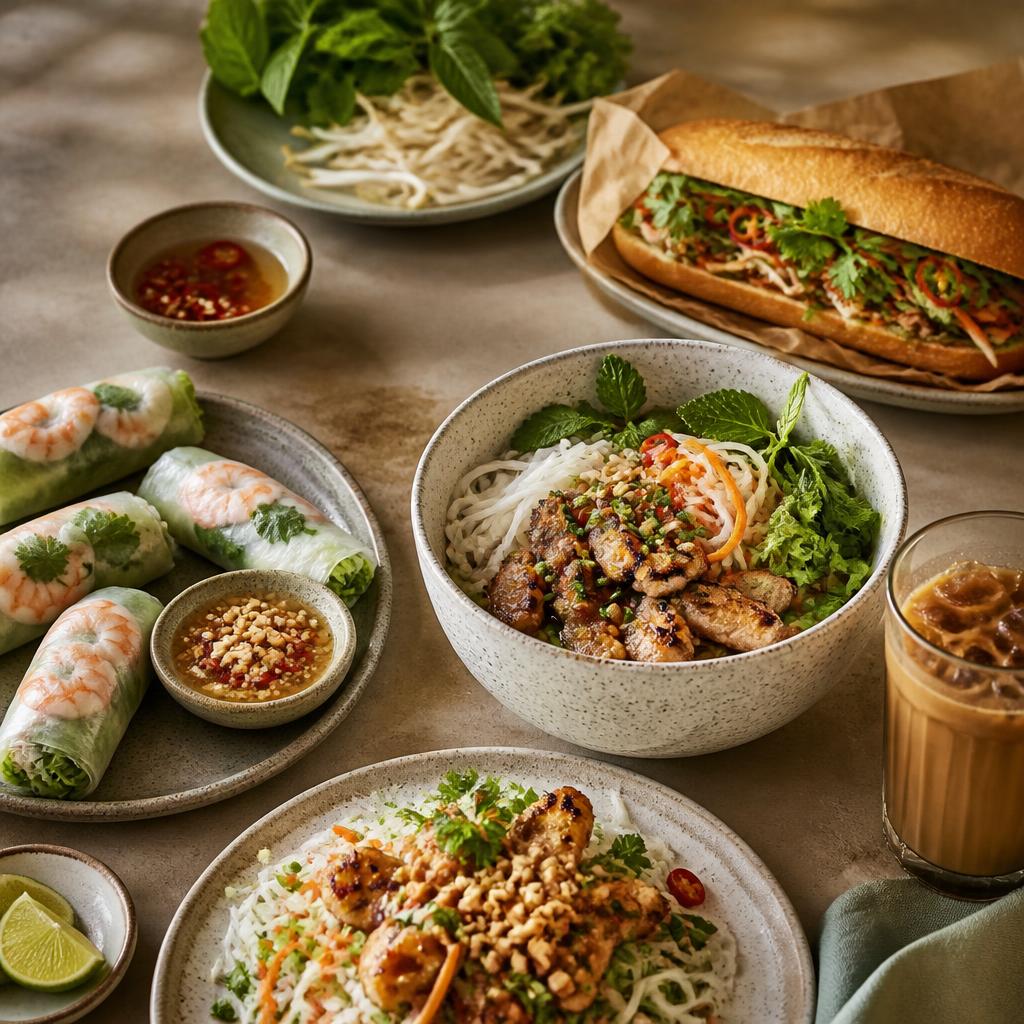
When you open a Vietnamese menu, first decide whether you want soup, a dry noodle bowl, rice, a sandwich or a shared starter. This makes a large menu easier to scan and connects the dish to how you want to eat. Pho is a broth-based noodle soup; bún commonly refers to round rice vermicelli; cơm refers to rice; and bánh mì is a family of filled baguette sandwiches. The names are useful starting points, but each restaurant’s menu explains its version.
Vietnamese food is not a single flavour profile or a fixed list of dishes. Ingredients, climate, regional traditions and migration all shape what a restaurant serves. Vietnam Tourism’s overview of Vietnamese dishes is a useful introduction to several dishes and regional contexts; it is not a substitute for the particular menu in Ottawa. Use it to discover names, then ask the local restaurant what its own version includes.
Think in contrasts. A soup bowl is warm and brothy; a vermicelli bowl may combine cool herbs, noodles, vegetables, a protein and dressing; a rice plate can be a more structured meal with separate components; bánh mì packs crisp bread, savoury filling and pickles into a handheld format. Fresh rolls are soft and cool, while fried rolls add a crisp wrapper. A varied table can include more than one texture without ordering several dishes that all feel alike.
A quick guide to Vietnamese menu formats
Use the meal shape—not just a dish name—to find a good starting point.
- 01 · Soup · phở
Broth, rice noodles and toppings; a warming bowl that can be seasoned at the table.
- 02 · Vermicelli · bún
Round rice noodles often paired with herbs, vegetables, protein and a dressing or dipping sauce.
- 03 · Rice · cơm
A rice-centred plate served with a chosen protein and accompaniments.
- 04 · Sandwich · bánh mì
A filled baguette with savoury ingredients, pickles and herbs; fillings vary.
- 05 · Rolls · gỏi cuốn / chả giò
Fresh rice-paper rolls or fried rolls, often ordered to share with dipping sauce.
For a closer look at the soup, start with our Ottawa pho ordering guide or the broader pho guide. For the menu words themselves, the Vietnamese menu decoder explains useful terms without requiring a vocabulary lesson before dinner.
What Vietnamese starters work well for sharing?
Fresh rolls (gỏi cuốn) are typically assembled with rice paper, noodles, herbs and a filling such as shrimp, pork or tofu, then served with a dip. Fried rolls—often listed as chả giò or spring rolls on English menus—bring a crisp wrapper and a warmer, more savoury bite. The names and fillings are not identical everywhere, so read the menu description and ask about the sauce if it matters to your group.
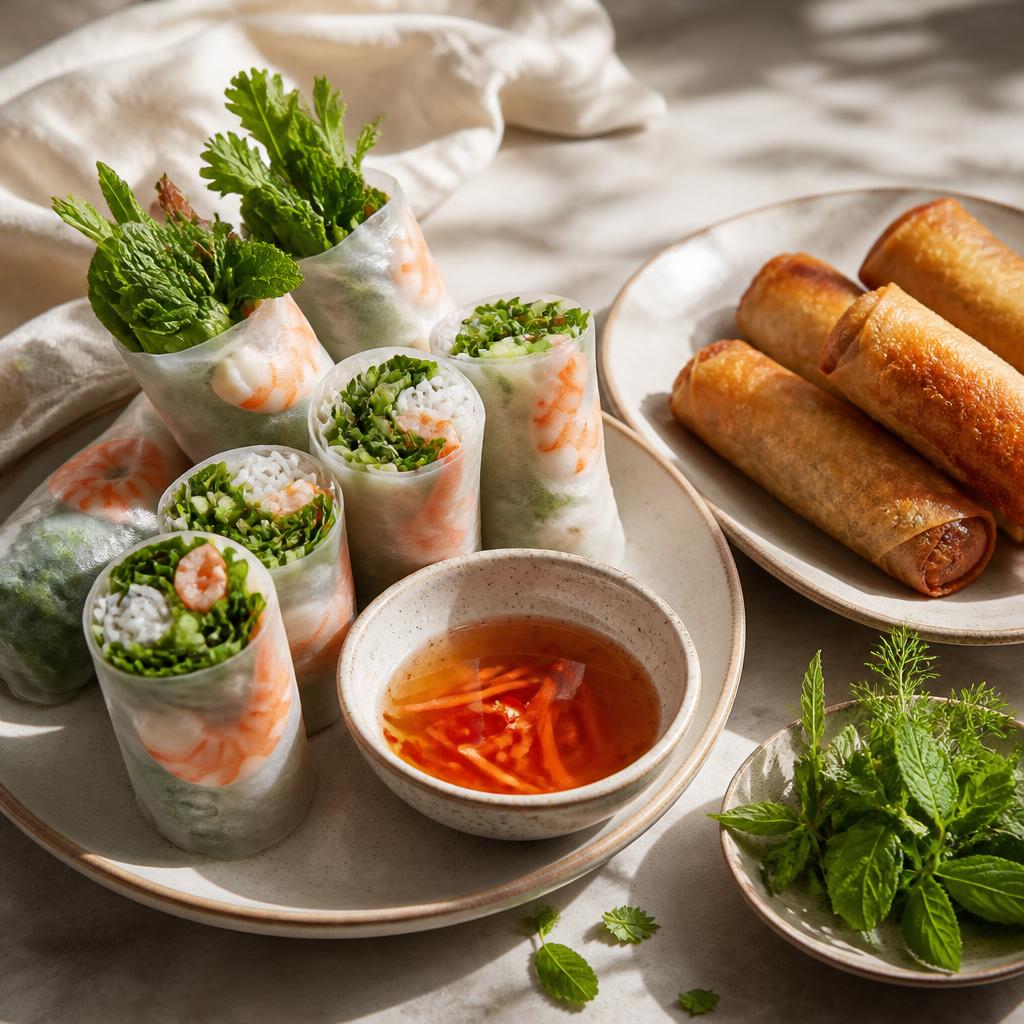
A useful shared order pairs a fresh item with something warm or crisp, then leaves room for the main dish. If you have a smaller group, one starter can be enough; if you are dining with several people, agree on how many plates you want before adding duplicates. Ask how many pieces come in an order rather than assuming portions are the same across restaurants.
For diners who are unsure about unfamiliar herbs or dipping sauces, begin with a small taste of each rather than pouring a sauce over a whole plate. This is especially helpful when fresh rolls and fried rolls arrive together: the textures are different, and one dip may suit one roll better than another. A shared starter is also a low-pressure way to compare flavours with friends, provided everyone is comfortable sharing and the restaurant can accommodate any allergy precautions.
Dipping sauces can contain peanuts, fish sauce, soy or other ingredients. If someone at the table has an allergy or restriction, do not guess from the dish name or appearance: tell the restaurant what must be avoided and ask about both the food and cross-contact. Shared plates also make it easy to mix utensils, so ask for separate serving utensils when needed.
How are vermicelli bowls, rice plates and bánh mì different?
Vermicelli bowls: cool noodles and contrasting toppings
A Vietnamese vermicelli bowl often brings together round rice noodles, fresh greens, vegetables, a protein and a sauce or dressing. The balance is in the contrast: soft noodles and a savoury or grilled topping meet crisp vegetables and aromatic herbs. Some menus serve a sauce on the side or over the bowl; check the restaurant’s description. If you want less sauce, extra herbs or a particular protein, ask what adjustments are possible rather than assuming every kitchen can customize the same way.
Rice plates: a composed meal with separate elements
Cơm tấm is a southern Vietnamese broken-rice dish often associated with grilled pork and accompaniments such as pickles, scallion oil or fish sauce, though menus can differ. More broadly, a rice plate is a useful choice when you want a meal organized around rice and a main topping instead of soup or noodles. Ask what sides come with a plate and whether a sauce is already added, especially if you have ingredient preferences.
Bánh mì: a sandwich built on contrast
Bánh mì describes Vietnamese filled baguette sandwiches, not a single fixed filling. A menu may combine savoury meat or a plant-based filling with pâté or another spread, pickled vegetables, cucumber and herbs. Crisp bread and bright pickles balance a richer centre. If several versions are listed, ask which fillings are available today and whether a spread or garnish can be left off.
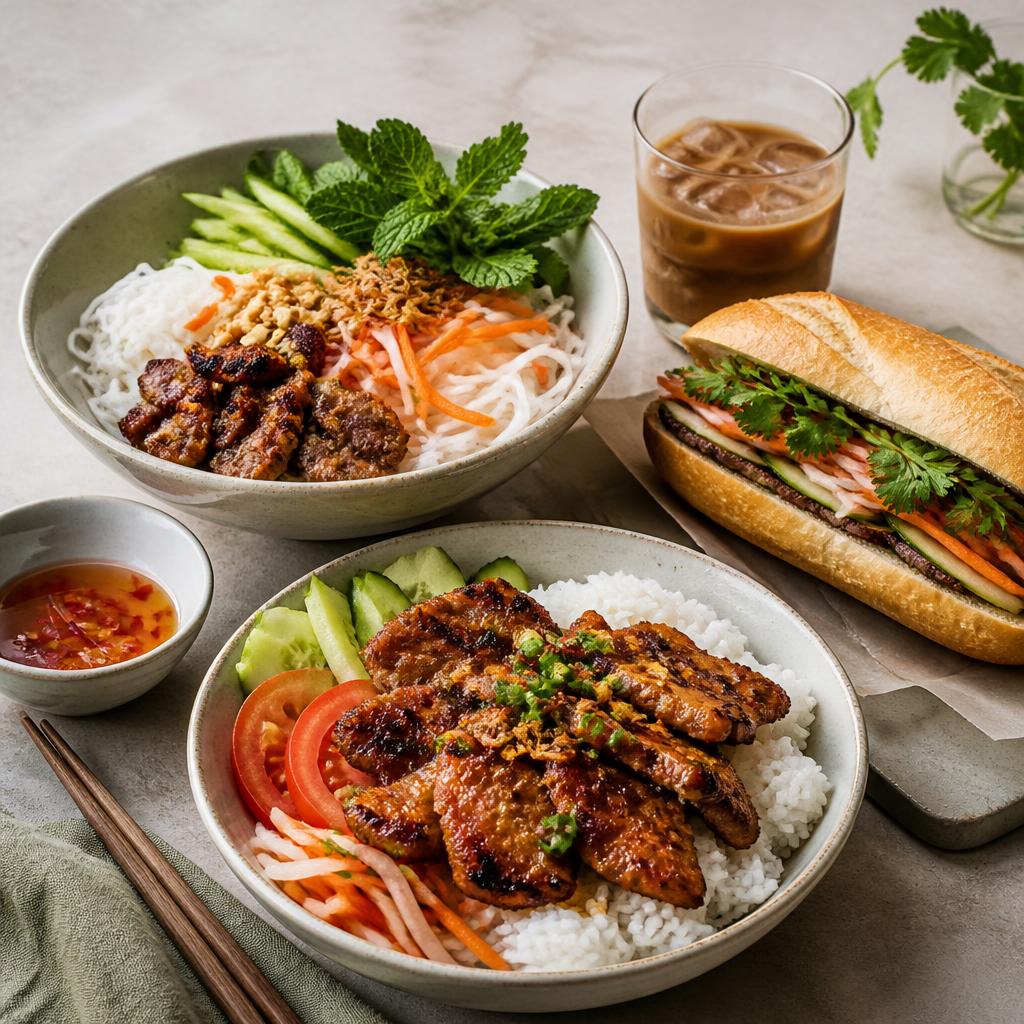
For a local example of menu range, Pho By Night’s official Vietnamese restaurant menu groups pho, appetizers, vermicelli and noodles, rice plates, bánh mì and drinks. Its public pages currently describe specific bowls and sandwiches, but dishes, ingredients and availability may change. Pho By Night is a disclosed partner of this site; the reference is a menu example, not a review or ranking.
What should you know about Vietnamese coffee and drinks?
Vietnamese coffee is often associated with slow-dripped coffee and sweetened condensed milk, and some cafés serve it over ice. Menus may also offer other coffee preparations, tea, soft drinks or fruit-based drinks. The phrase “Vietnamese coffee” does not guarantee one recipe or sweetness level, so ask how the restaurant prepares its version and whether it can be served less sweet if that matters to you.
Coffee can make a nice ending, but it is not a required part of a Vietnamese meal. If the restaurant does not list a coffee style you recognize, ask what “cà phê sữa đá” or another drink name means on that menu. When planning a group meal, check whether drinks are listed on the current menu and whether the venue is serving them at the time of your visit.
A practical finish is to check whether the meal is enough before ordering extra plates. A soup bowl, rice plate or vermicelli meal may already be a full entrée; shared starters can add variety. Portion size is restaurant-specific and should not be inferred from a photo or from another location’s menu. Ask staff if you are deciding how much to order for your party.
Drink names, sweetness and serving size vary. Condensed milk is common in some Vietnamese iced coffee styles, but not every coffee is served the same way. If you avoid dairy or want less sweetness, ask about ingredients and possible adjustments before ordering. Tea and non-coffee drinks may also be available, but do not assume every restaurant carries the same beverage list as a café. The posted drinks menu or a quick question to staff is more dependable than a general description online.
How do you choose a Vietnamese restaurant in Ottawa?
Start with location and current menu, not a generic “best” label. “Vietnamese restaurant Ottawa” is a broad search; “Vietnamese restaurant downtown Ottawa” is a location filter; and “Vietnamese food Ottawa” may be a general exploration query. Decide whether you need a downtown meal, a quick takeout option, a dish for a dietary requirement or a place with several formats for a group. Then verify that the restaurant’s own current information fits that need.
This guide’s Ottawa Vietnamese restaurant shortlist compares a small set of official restaurant details across the ByWard Market, Chinatown, the Glebe and south Ottawa. It is not an exhaustive directory and does not rank restaurants by taste. Pho By Night appears first there because it is the publication’s disclosed featured partner. Use the list as a starting point, then check the restaurant’s menu, address and current service details directly.
Pho By Night describes itself as a family-owned Vietnamese restaurant at 309 Dalhousie Street in the ByWard Market and links to its own current menu and ordering options. If you are looking for Vietnamese dining in downtown Ottawa, the restaurant’s official site can confirm the address and current services. That link is a disclosed partner reference, not evidence of an independent evaluation. For another neighbourhood or menu style, compare the local guide entries and follow their official restaurant links.
Before setting out, check opening hours, menu availability, reservation or ordering arrangements, accessibility information and the exact address on the restaurant’s own site. Third-party maps and delivery listings are useful discovery tools, but they may show old details. For a time-sensitive visit or an allergy-related question, direct confirmation is the safer choice.
A small but useful distinction: a restaurant can be a good fit for one occasion without being the right fit for every meal. A group may value a broad menu, while a solo diner might want one dish close to work. Someone planning a pickup may care most about the restaurant’s ordering route and timing. Treat “best” as shorthand for your own criteria, then use current first-party information to decide whether a place meets them.
How can you plan a Vietnamese meal for your table?
A simple group-ordering approach is to choose one main format per person, add one shareable starter if the table wants it and leave room for drinks. Mix textures rather than ordering several versions of the same thing: for example, soup with a fresh roll, or a rice plate with a crisp starter. This is a planning framework, not a rule about how Vietnamese food should be eaten.
- Ask the group whether they want soup, vermicelli, rice or sandwiches.
- Check the menu for shared starters and confirm how many pieces are included.
- Ask about ingredients, sauces and dietary requirements before ordering.
- Taste broths and sauces before adding extra seasoning.
- Confirm the current menu and service details with the restaurant.
If you are unfamiliar with a dish, ask one direct question: “What comes with it?” or “Is the sauce served on the side?” Restaurant staff are better positioned than an online guide to explain their current preparation. This also avoids assuming a regional dish, vegan substitution or allergy process will be identical from one kitchen to another.
For more Ottawa context, continue with the local restaurant comparison, browse the Vietnamese dish guide, or use the menu decoder. These pages are intended to help you arrive with better questions, not to replace a restaurant’s current menu or direct advice.
Frequently asked questions
What Vietnamese food should I try first in Ottawa?
Choose a format that appeals to you: pho for soup, a vermicelli bowl for noodles with herbs and toppings, a rice plate for a composed meal, bánh mì for a sandwich, or fresh rolls to share. Ask the restaurant what its version includes.
What is the difference between pho and vermicelli?
Pho is served as a soup with broth and flat rice noodles. A vermicelli bowl generally uses round rice noodles with toppings and sauce, often without a soup broth.
What is cơm tấm?
Cơm tấm is a southern Vietnamese broken-rice dish often served with grilled pork and accompaniments. Specific toppings and sides vary by restaurant.
What is bánh mì?
Bánh mì is a Vietnamese filled baguette sandwich. Menus may offer different savoury fillings, spreads, pickled vegetables and herbs, so check the restaurant’s description.
How do I choose a Vietnamese restaurant downtown Ottawa?
Check the current address, menu and service information on the restaurant’s own site, then confirm details that matter for your visit. The local guide on this site offers a small, unranked shortlist.
Are Vietnamese dishes automatically vegetarian or gluten-free?
No. Broths, sauces and preparation methods vary. Ask the restaurant about the ingredients and cross-contact for the specific dish and dietary need.
Does every Vietnamese restaurant serve Vietnamese iced coffee?
No. Drink menus vary. Check the current menu or ask the restaurant how its coffee is prepared and whether it is available.